CSend
Cross-platform peer-to-peer chat for Classic Mac and modern systems
CSend is a peer-to-peer text chat application that works between Classic Macs and modern systems over a LAN. It builds on top of the PeerTalk SDK for all networking, so the application itself is a thin UI layer handling user input and message display. The POSIX version runs in a terminal. The Classic Mac version has a proper GUI built in ResEdit with a message area, input field, peer list, and send button.
# Architecture
CSend is a thin layer on top of PeerTalk. The two UI frontends share the same networking code underneath.
# Features
- Five build targets: POSIX, 68k MacTCP, 68k Open Transport, PPC MacTCP, PPC Open Transport
- Terminal commands: /list, /send, /broadcast for the POSIX version
- Classic Mac Toolbox GUI with ResEdit resources
- POSIX version uses C11 with pthreads and an SPSC ring buffer
- Classic Mac version uses C89 with WaitNextEvent and PT_Poll in the idle handler
# Tech Stack
# Screenshots
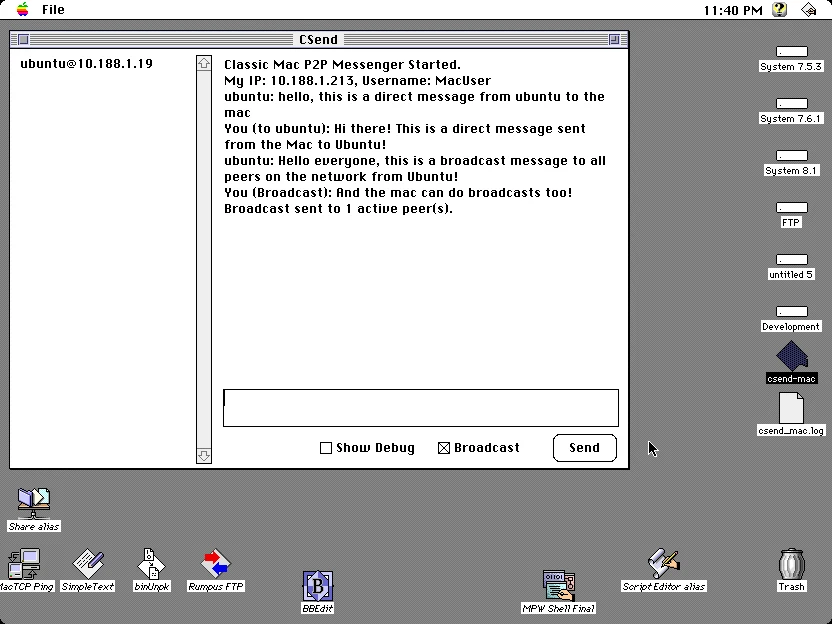
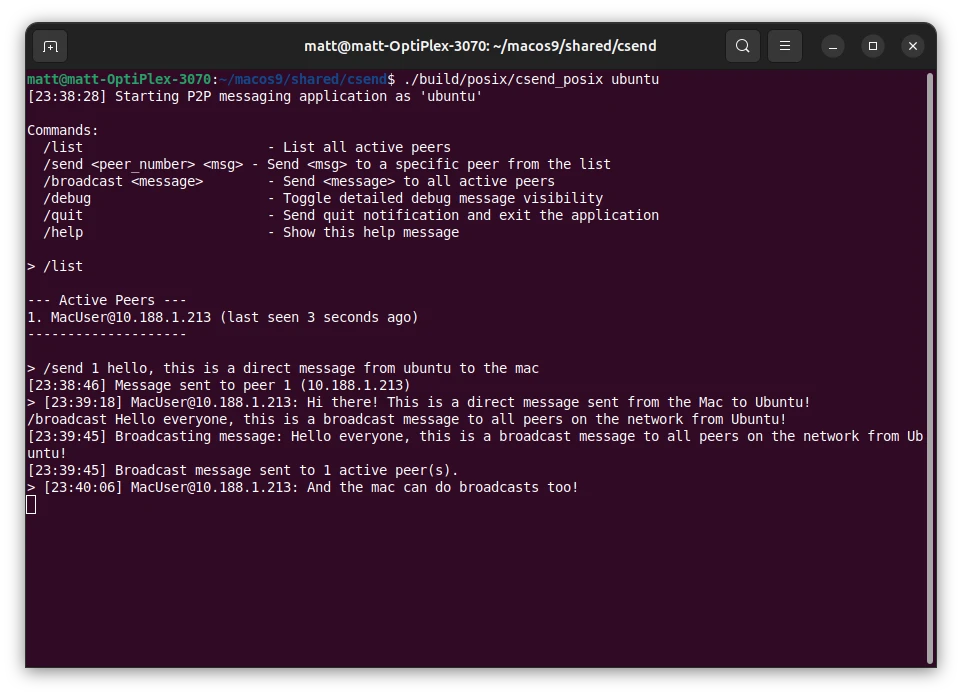
# Dependency Chain
CSend sits on top of the Classic Mac networking stack. The setup.sh script bootstraps everything from scratch, cloning and building all dependencies (Retro68, clog, PeerTalk) and configuring the environment. The Classic Mac Hardware MCP handles deployment to the real hardware.